The World’s Largest Breasts

It’s good to have ambition: becoming the first female president… learning to speak nine languages… or, you know, possessing the largest breasts on the planet. The following ladies apparently never met a bag of saline or silicone they didn’t want to take home, which is why they make Pamela Anderson look like Kate Hudson. We salute their commitment to being the best at the breast, but one question still lingers:

Lolo FerrariThe World's Largest Breasts 

Lolo Ferrari World’s Largest Breasts 

Lolo Ferrari

Life seemed pretty good for French-born Lolo Ferrari. After multiple operations-the reported number ranges from 18 to 30-the former porn star was recognized by the Guinness Book of World Records (for a number of augmentations) and achieved cult status. But things went bust in 2000 when Ferrari was found dead under suspicious circumstances; was it suicide, murder, or-dun dun dun-those darn breasts? Ferrari’s husband, who suggested that she may have suffocated under the weight of her own breasts, was arrested and then released, and the cause of death still remains foggy. What is clear is that Ferrari’s ticket to fame turned against her in the end. Says London’s TheGuardian newspaper, “Her mammoth breasts, designed by an aircraft engineer, held three liters of surgical serum each. She had difficulty breathing, could not sleep on her stomach or back, and was afraid of flying because she thought they might explode.” Reports Wikipedia.com, “She had to wear a specially engineered brassiere size 54 J, and as a result of her many surgeries she suffered from a number of medical afflictions and lived with a heavy regimen of drugs.”

Maxi MoundsThe World's Largest Breasts 

Maxi MoundsThe World’s Largest Breasts 

Maxi Mounds

If it weren’t for Maxi, the Guinness Book of World Records wouldn’t even have a category for “World’s Largest Augmented Breasts.” According to Wikipedia.com, this pioneering porn star fought for-and eventually won-the distinction for her 42M (that’s 32 inches under and 60.5 inches around) knockers. Still, Maxi hasn’t let the success go to her, ahem, head. On her website, MaxiMounds.com, she writes, “I know I won’t hold the record forever but I’m happy that I helped to create the category for me and the other girls to follow in the future.” Maxi-who lists her current measurements as 156MMM-26-36-also explains that she has “silly string” implants which continue to grow after implantation.

Norma StitzThe World's Largest Breasts 

Norma StitzThe World’s Largest Breasts 

Norma Stitz

Any girl can get implants, but Norma Stitz’s (get it?) low-hanging breasts have been recognized by Guinness as the largest natural breasts in the world. Yep, folks, they’re real. According to Imdb.com-as you might’ve guessed, Norma’s appeared in some, er, films. At the time of her record (1999), Norma’s measurements were 70-48-52, with each breast weighing 28 pounds and a 48V bra size. Her breasts now reportedly weigh 35 pounds apiece and measure 72 1/2 inches. In other words, her breasts combined weigh almost as much as an Olsen twin. I just posted a new informative post about the type of laser eye surgery at http://body-philosophy.net/types-of-laser-eye-surgery-and-their-benefits/ which is equally informative as this post and worth reading.

Chelsea CharmsThe World's Largest Breasts 

Chelsea CharmsThe World’s Largest Breasts 

Chelsea Charms

Billing herself as “America’s Bust Sweetheart,” Chelsea Charms has endured three breast augmentations, including string implants, to achieve her hefty 153XXX-23-34 measurements. On her website, ChelseaCharms.com, the Twin Cities native (ha!) claims that each breast weighs 26 pounds, and, because of the string implant, they’re still growing. She also has to have her bras custom-made. When asked if her jumbo breasts get in the way, Chelsea answers, “Not so much, except when shaving my legs, painting my toe nails or maneuvering through tight spaces. However, I should note that during the first few months after having the third and final jumbo-boost, it did take a few adjustments with regards to eating and other daily tasks that I once took for granted (there’s nothing more annoying than having food disappear into your cleavage).”

MinkaThe World's Largest Breasts 

Minka World’s Largest Breasts 

Minka

This Korea-born adult film star started out as a tennis player. Somehow we think her giant breasts might have hindered her serve. Instead, she’s won awards like AVN‘s “Big Bust Video of the Year” and Exotic Dancer Magazine’s “Best Big Bust Entertainer of the Year.” Take that, Wimbledon! On MinkaXXX.com, Minka claims to be “the largest-breasted Asian in the world, bar none!” Wikipedia.com cites her measurements (achieved through string implants) as 70HH-22-35, with a bra size of 44KK.

Sabrina SabrokThe World's Largest Breasts 

Sabrina SabrokThe World’s Largest Breasts 

Sabrina Sabrok

Watch out, girls! Sabrina Sabrok is a woman with a plan. The Argentinean-born Mexican television star stirred up controversy last year when she announced her plans to undergo a 14th breast enlargement in order tohave the largest breasts in the world. Sabrok, who lists her measurements as 52MMM-21-40 on SabrinaSabrok.com, was warned that to do so would endanger her health. Reports ImpactLab.com, “Sabrok…is already a size 42 triple G but wants to go on to be a 42 triple X, reports Las Ultimas Noticias. A spokesman for the Plastic Surgeons’ Association of Argentina warned the weight would be too much for her body. He said: “She is risking her health because there needs to be balance on the body and she will lose that if the breasts go too big.” Sabrina’s solution! According to AnythingHollywood.com, she plans to get butt implants to even herself out. Smart thinking.

Wendy WhoppersThe World's Largest Breasts 

Wendy WhoppersThe World’s Largest Breasts 

Wendy Whoppers

The name says it all. Ms. Whoppers started out as a 34B; four enlargements later, she was a 34H. In an interview with Behavior Magazine, the adult film star described her transformation. “With 3000 cc implants, my advertised measurements were 80 HHH; my actual bra size was 34H,” she said. “We have to add more numbers to the advertised measurement because men do not understand how bra measurements work. They are under the false impression that the number has something to do with the size; in fact, the number is only the inches around the rib cage under the breasts, so that never changes unless you gain weight. The cup size is the only measurement that tells breast size. So if I had advertised myself as a 34H, then guys would have thought that was small.” Perhaps-if they were blind… and didn’t have hands. Though Wikedia.com claims that she’s had her breasts reduced since retiring from films, WendyWhoppers.com lists her measurements as 80HHH-21-34.

Traci ToppsThe World's Largest Breasts 

Traci ToppsThe World’s Largest Breasts 

Traci Topps

Though Traci Topps retired a few years ago, she remains a popular big bust icon. Adult site Danni.com lists her measurements as 36HHH-24-36, and with film credits like Chloe’s Busty ConquestsThe Best of Bosom BuddiesBig Boob Mamathon, and Big Bust Strippers 2, we believe it.Crystal StormThe World's Largest Breasts 

Crystal StormThe World’s Largest Breasts 

Crystal Storm

There’s no denying that adult entertainer Crystal Storm has a massive chest; even Wendy Whoppers recognizes her achievements to cleavage. The question is, just how big are those boobs? Wikipedia.com reports that Crystal got into some legal problems after listing her measurements as 121 XXX-24-36; turns out she was talking centimeters, not inches. For further clarification, Imdb.com says that the star of Big Busty 44, Big Busty 50, and The Greatest Big Bust Video Volume 2 boasts breasts that “weigh 18 and 20lbs., and her (unexaggerated) bust measurement is 50″.”

SaRenna LeeThe World's Largest Breasts 

SaRenna LeeThe World’s Largest Breasts 

SaRenna Lee

In the world of adult entertainment, SaRenna Lee is best known for two things: a striking resemblance to Marilyn Monroe, and enormous breasts, courtesy of implants. MrBra.com lists SaRenna’s bra size as 44H after surgery; it was already a voluptuous 32D sans implant. We guess bigger is better though.

Read More

Growing Number of Hospital Patients Receiving Fecal Transplants

Fecal Transplant Anyone?

Fecal Transplant Anyone?

Would give your nearest and dearest some of your bone marrow at a time of need? A kidney perhaps? How about a pile of your poo? Doctors in Canada are finding the best remedy for a potentially deadly infection may be a fecal transplant. Yes, you read it correctly. FECAL transplant.

The Straight Poop On The Disease

The last place you’d expect to get sicker is in a hospital, right? But illnesses you catch during a stay in a long-term care facility or hospital are on the rise. One of the most widespread and potentially serious bacterial infections is Clostridium difficile known simply as C. difficile (or C. Diff). In fact, 253,000 hospitalized patients were affected by C. difficile-associated disease (CDAD) in 2005-more than double the number in 2000, according to the CDC.

Complications of the infection can include kidney failure as a result of severe dehydration, bowel perforation, or a ruptured colon – both of which spill bacteria into the abdominal cavity, or even death.

Crappy Treatment Options

Up until now, the most common treatment was antibiotics such as metronidazole or vancomycin, which get rid of the C. difficile but allow normal bacteria to flourish in the intestine. However, both antibiotics kill only the active form of C. difficile, not the tough spores it produces. Because these spores remain in the body, the infection can return – sometimes more than once. What’s more, it was probably a heavy dose of antibiotics that allowed C. Diff to flourish in the first place.

For doctors in Scandinavia, the first choice for treatment of C. Diff is “fecal bacteriotherapy” according to Dr Johan Bakken of St. Luke’s Infectious Disease Associates in Duluth, Minn. Dr. Bakken says the treatment restores colon health by reintroducing missing bacterial flora from stool collected by a healthy donor.

The poop is liquefied, mixed with saline, and then generally administered via enema. Normal bowel function is usually restored within 24 hours of treatment. Published studies show that more than 90 percent of patients are cured through fecal transplants – and many after just one treatment.

Finding Someone To Shoot The Sh*t

It’s difficult to find a physician in the US to perform fecal transplants, but more and more Canadian doctors are performing the procedures.

Toronto resident Wendy Sinukoff provided the poop for her sister, Marcia Munro, who had suffered from C. Diff for 14 months. The transplant was performed by Dr. Tom Louie, head of infection control at Foothills Hospital in Calgary.

“I had to collect stool samples for five days prior to our leaving Toronto, and I collected it in an ice cream container and kept it in the fridge,” said Minkoff. “My biggest fear was that my samples were not allowed to be frozen, so I had to take them as carry-on luggage in the airplane and I was terrified that I was going to be asked to have my luggage searched,” she said.

Sinukoff’s sister said the transplant was a success. “This procedure cured me… I know many people die from C. difficile and I want people to know there is hope when you have this illness.”

“Never underestimate the healing power of stool,” says Dr. Thomas Moore, a colleague of Dr. Bakken, who has personally performed at least 65 fecal enemas with a 97% success rate. “Sick elephants in the wild are fed stool from their mothers, so the treatment idea is nothing new.”

Indeed. Over the years, I’ve suggested to several ex-boyfriends that they ought to “eat sh*t.” I certainly felt better after saying it.

Read More

The History of Body Language

Handshaking

Why is it that when we meet someone, we shake their hand, when we’re proud of them, we give ’em a high five, and when we’re angry beyond words, we give ’em the finger? The answers may surprise you…

Shaking hands

Have you ever stopped to wonder why we shake hands to say “hello”? The tradition is a Western one, with likely origins in ancient Greece or the Middle East, where people have long shook hands as a way of making a pledge. This symbolic expression of pledging is thought to be the reason that, during a wedding ceremony, the bride and groom are asked to join hands as they recite their vows to one another.

Not all handshaking is so gentle, however. In Russia, the tradition of handshaking is more a form of male competition than intimate union. There, the handshake is sometimes taken to a painful, competitive extreme – a little like arm wrestling. Even in the United States, a firm handshake is often considered a sign of confidence and power.

The earliest handshakes may have been more practical than symbolic. As people from different tribes encountered one another, they may simply have been presenting their open hands to each other to demonstrate that they weren’t carrying any weapons!

Raising an eyebrow

Eyebrow-raising is a gesture with its roots in biology rather than social custom. Just as dogs raise their ears and horses flare their nostrils when they are most alert, human beings – who depend on sight more than sound or smell – tend to raise our eyebrows when we are surprised or suddenly called to attention. Not only do our eyebrows involuntarily go up, but our pupils dilate as well. Some scientists theorize that these responses are designed to help us get a better view of whatever has so suddenly caught our interest.

Of course, sometimes eyebrow-raising can be an intentional gesture, too. As such, it communicates both vulnerability and interest. And it’s one of the most common facial expressions used in flirting!

Kissing

So, who invented kissing? Some scientists theorize that the gesture has its origins in mothers feeding their babies by chewing up food and then transferring it, kiss-like, to their babies’ mouths. Not a very romantic image! Then again, the practice of kissing may have more lofty origins. In ancient Hebrew, the word for breath also means soul. There are indications that as early as 2000 BC, some cultures believed that bringing the mouths (or breath) together signified the joining of the two souls.

Ancient Egyptians seem to have been big fans of kissing if their art is any indication. Some scholars believe that they thought of kissing as the giving of breath, or “giving life.

The Romans are credited with turning the kiss into a sophisticated form of communication. The Romans kissed each other hello on the mouth or on the eyes, kissed robes, and kissed rings and statues of gods to indicate submission and respect. One Roman emperor sent a message about what he thought of other people by his choice of the body part that he allowed them to kiss. Important nobles were allowed to kiss his lips, less important ones kissed his hands and the least kissed his feet. The Romans had several different words for kisses: an osculum was a friendship kiss; barium was a passionate kiss, and a stadium was a deep kiss.

And in some African tribes, people honor their chief by kissing the ground he walks on!

iStock_000004356705Small.jpg

Crossing your heart

Remember how you made a promise to your best friend in first grade? “Cross my heart and hope to die – stick a needle in my eye.” What was that all about? Well, crossing one’s heart, as well as crossing your fingers, has its origins in religious tradition. The crossing is a reference to “the cross” of Christ. As such, it’s connected to blessing – or invoking God as a witness to a promise you’re making. As part of worship, Catholics today still make the sign of the cross by first touching their hand to their forehead, then chest, and then left shoulder and righter shoulder – a gesture that looks quite a bit like crossing your heart.

Winking

A common nonverbal gesture in Europe and the United States, winking is an indication of a private understanding, a secret, or collusion of sorts. In Bodywatching (1985), Desmond Morris calls the wink a “directional eye closure.” By that, he means that the quickly closed and then opened eye is communicating a “secret aimed only at the person being looked at. The other eye is being kept open for the rest of the world, who are being excluded from the private exchange.”

Giving ’em the finger

Okay, is it obvious? Even the Romans used this gesture, calling it the digitus impudicus, or “digit without shame.” The suggestion is phallic aggression – but I doubt many people using this gesture stop to think much about what exactly it means.

Shrugging

Shrugging has been explained as the very opposite of a warlike posture. Instead of standing with shoulders squared, head upright, fists clenched, the shrugging person hunches the shoulders, tilts the head, and turns opened hands outward. The message is one of helplessness and retreat. Remember this: next time you’re in the middle of an important negotiation – don’t shrug!

Shaking your head

It took Charles Darwin, the guy who came up with the theory of evolution, to explain this one. Head-shaking is so nearly universal, Darwin thought that it must have biological origins. He claimed that nodding the head “yes” mimics the forward head nod of a baby seeking or attaching to his/her mother’s breast. And shaking the head “no”? That’s the headshaking gesture of a baby refusing the breast and/or food.

Crying

Animals don’t shed tears, except to wash irritants out of the eyes. So, why do we? Charles Darwin puzzled this one out, too. While he admitted that crying was a useful way for babies to get the attention of their caregivers, he was never able to find evolutionary usefulness for crying, or for tears. Finally, he hypothesized that someday humans would no longer cry.

Maybe he’s right. Maybe the day will come when we no longer have the need to cry. Or maybe we could just get past giving each other the finger.

Read More

Celebrity Nose Jobs

I honestly can’t understand why celebrities try and keep their plastic surgery a secret. Attempted cover-up, in my opinion, is not unlike taking your purebred dachshund to a breeder, with claims he’ll father a show-worthy litter when you’ve already had him neutered. Yep, sooner or later, despite the quality of your stud’s neuticles (canine testicular implants), someone’s gonna find out that Old Yeller’s gone under the knife.

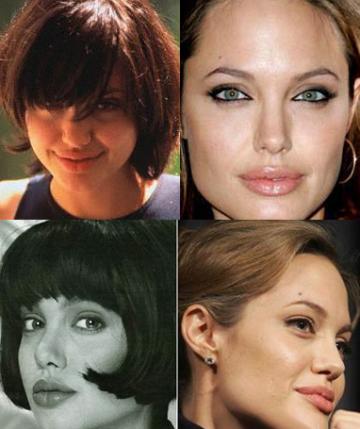
.Angelia Jolie: Before & After

Angelia Jolie: Before & After

ANGELINA JOLIE. Did she or didn’t she? I’d say 99% of the women in the world would like to believe Angelina Jolie has had at least some work done to her face. Why? Because it would make of us average lookin’ folk feel a little less bad for looking, well, a little average. Duh!

Although there’s no proof that the 31-year-old beauty has gone under the knife, CosmeticSurgeryTruth seems to think she had the tip of her nose refined. Cityrag believes Jolie has had a nose job and cheek implants sometime in the last ten years. If you’re still on the fence, check out Bastardly.com for more photos of Angelina pre-stardom.Ashlee Simpson: Before & After

Ashlee Simpson: Before & After

ASHLEE SIMPSON. Who doesn’t know about Ashlee Simpson’s nose job? Last year, when asked about the widespread speculation in the tabloids, the 22-year-old singer “giggled and told the Associated Press: ‘Everybody’s already saying it, so I just don’t talk about it. I’m like, okay, whatever. It doesn’t bother me.'” It did, however, bother Marie Claire magazine, and ignited heated criticism from thousands of Simpson’s fans.

The July 2006 edition of Marie Claire featured a pre-nose job of Simpson saying, “Everyone is made differently, and that’s what makes us beautiful and unique. I want girls to look in the mirror and feel confident.”

As reported by ChinaDaily.com, the editor of Marie Claire, Joanne Coles, fired back in the September 2006 issue when she wrote, “We’re dazed and confused – and disappointed – by her choice, too.” The magazine received thousands of letters from readers who agreed.

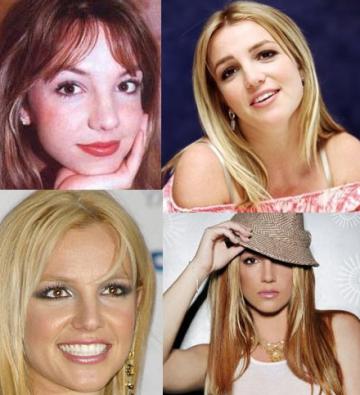
.Britney Spears: Before & After

Britney Spears: Before & After

BRITNEY SPEARS. My feelings for 25-year-old Britney Spears took a turn for the better during her 2006 interview with NBC‘s Matt Lauer after Brit was caught on tape driving with her baby on her lap. Britney’s defense:

“I can’t go anywhere without someone judging me…I did it with my dad. I’d sit on his lap and I drive. We’re country.”

Okay, sure, so the “We’re country” excuse may seem a little redneck, but at least it’s honest. Now, if only she would fess up to the plastic surgery she’s had since her days as a Mouseketeer.

AwfulPlasticSurgery.com reports, “Britney’s nose has gotten smaller and more contoured over the past few years.” They also report she’s had more than her share of breast augmentation procedures.

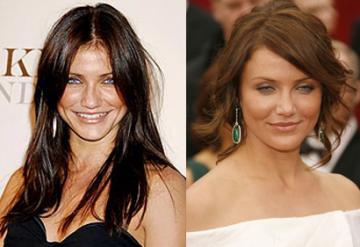
Cameron Diaz: Before & After

Cameron Diaz: Before & After

CAMERON DIAZ. Last November, 34-year-old Cameron Diaz told People magazine she wanted a nose job.

“‘I’m getting it fixed. I can’t take it. I cannot breathe at all,’ says Diaz, who broke her nose for the fourth time while surfing a few years ago. ‘One side of my nose is totally shattered – my septum is basically like a train derailed.'”

Makemeheal.com claims the nose job that Ms. Diaz had done was not only for medical reasons, but also imparted some cosmetic benefits. The website reports, “Photos of the star at the Oscars versus pre-operative photos show a straighter bridge than her older more crooked nose whose bridge was twisted towards the right at the top area of her nose. Diaz wisely did not have her nose made to look to perfect and asymmetrical as part of her charm lies in her not being a classic beauty with perfect features.”

It’s also reported that Diaz’s rhinoplasty was performed by Dr. Raj Kanodia, the same plastic surgeon responsible for both Ashlee Simpson and Jennifer Aniston’s new noses.

Catherine Zeta Jones: Before & After

Catherine Zeta-Jones: Before & After

CATHERINE ZETA-JONES. MakeMeHeal.com claims “the star denies having had any plastic surgery, although it is rumored that she had a blepharoplasty (eye lift) in 2001 and that she had previously had her nose done.” Yeeeah.com also reports (with pictures) that the lovely 38-year-old actress most recently went under the knife for a post-baby breast enhancement. Whatever she has or hasn’t had done, her plastic surgeon deserves a mountain of gold stars (not to mention referrals) for his work. I certainly hope to look that young and all natural when I start planning my 40th!

Cher: Before & After

Cher: Before & After

CHER. What part of Cher’s body hasn’t been altered? According to BodyLanguage.net, “Cher says the first time she went under the knife was to have a rhinoplasty, a result of seeing herself on film for the first time. ‘I looked at myself up there on that screen and thought, I’m all nose.'”

Although the 61-year-old, multi-award-winning actress and musician continually denies having rib removal and cheek implants, she openly admits to being somewhat of a “plastic surgery poster girl.” I probably would have used the word billboard instead of a poster, but she still gets my vote for her candor. It also doesn’t hurt that Moonstruck (1987) is one of my all-time favorite films.

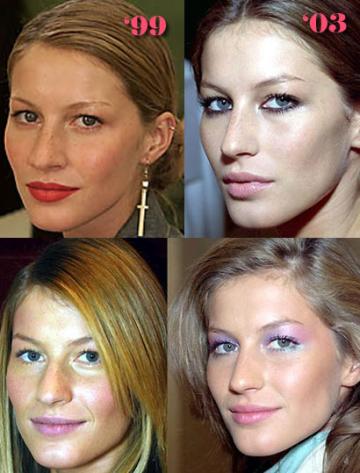
Giselle Bundchen: Before & After

Giselle Bundchen: Before & After

GISELLE BUNDCHEN. According to GoodPlasticSurgery.com, 26-year-old supermodel, Giselle Bundchen has had a little trimmed off her once larger nose. Although Bundchen denies ever going under the knife, I’d still like (or rather need) to believe no one is born that perfect. (Insert BIG jealous sigh here)

Gwen Stefani: Before & After

Gwen Stefani: Before & After

GWEN STEFANI. CelebrityCosmeticSurgery reports, “Thirty-seven-year-old singer Gwen Stefani has given thought to go under the knife as she ages to maintain her looks according to a recent interview. Stefani states that she is a fan of television shows where surgery is the focal point, confessing to watching a lot of them while pregnant with her son Kingston last year.”

Meanwhile, ConversationsFamousPeople.blogspot.com leads me to believe the new mom has already gone under the knife in years past to make her face (her nose, rather) a little more camera-friendly.

Gwyneth Paltrow: Before & After

Gwyneth Paltrow: Before & After

GWYNETH PALTROW. “Paltrow had a nose job sometime in her past and this is evident when comparing older photos of her to recent photos which show a thinner nose,” states MakeMeHeal.com.

And after giving birth to her two children, Gwyneth is not above having additional plastic surgery procedures. As reported by CelebrityCosmeticSurgery.com, “The Sun claims Paltrow has told pals, ‘My stomach is rippling, my breast don’t feel good. I’ve been trying to work it out. I want to do something about it….’ septum that was incorrectly done over 12 years ago.'”

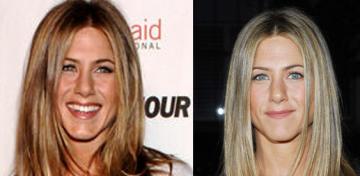
Jennifer Aniston: Before & After

Jennifer Aniston: Before & After

JENNIFER ANISTON. US Magazine reports, “In the early morning hours of January 20, one day after taping a guest spot on pal Courteney Cox’s new series Dirt, Aniston’s driver dropped her off at Kanodia’s office in Beverly Hills. The actress emerged four hours later, but instead of her usual golden glow, she sported fresh black-and-blue bruises along her right eyebrow and across the tip of her nose and upper lip.”

Aniston’s rep confirms the operation, though claims the procedure was done to, “‘correct a deviated

Jennifer Grey: Before & After

Jennifer Grey: Before & After

JENNIFER GREY. As reported by CelebrityPlasticPics.com, “After her successful role as the ugly-duckling teenager in Dirty Dancing, Jennifer Grey underwent nose surgery (rhinoplasty). They say she had not one but two nose jobs in the hopes that a better nose would advance her career. [And yet] after rhinoplasty she lost her special thing and finally, her career failed to live up to its earlier promise and has relegated her to made-for-television films.”

Maybe it’s an age thing, but I remember watching Grey in Dirty Dancing and thinking, Frances ‘Baby’ Houseman has a nose like mine, and look who she ended up with! Yes, the old Jennifer Grey gave me hope of finding a hot “dancing partner” without looking like everyone else on the Big screen. And now… well now I can barely watch free reruns of the 1987 hit without, well, feeling a little self-conscious.

JENNIFER LOPEZ. AwfulPlasticSurgery.com reports that Jennifer’s nose was thinned back in 1999. According to one of Google’s favorite websites, “She’s an example of good plastic surgery because the changes are not extremely noticeable and enhance her looks.”

Kate Hudson: Before & After

Kate Hudson: Before & After

KATE HUDSON. GoodPlasticSurgery.com thinks bridgework was “the perfect fix for Kate Hudson’s once fat pudgy wide nose.” Does anyone find it odd that Hudson’s old nose looks identical to her current on-again-off-again beau Owen Wilson’s?

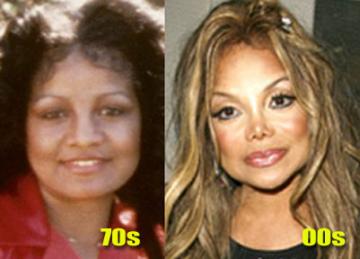
Latoya Jackson:: Before & After

Latoya Jackson:: Before & After

LATOYA JACKSON. Sorry, Ms. Jackson, but you’re looking an awful lot like Michael these days.

And CelebrityCosmeticSurgery.blogspot.com agrees. According to their website, LaToya’s nose “appears to have been overly thinned. Nostrils can take an unnatural shape like she has when an aggressive alar [winglike] resection is performed. This is a procedure where the bottoms of the nostrils are cut out to make the nostrils smaller and the nose thinner. It can create an appearance where the nostrils appear pasted onto the face. Thinning the nose by removing too much cartilage can make the nasal tip appear pinched.”

Lil' Kim: Before & After

Lil’ Kim: Before & After

LIL’ KIM. Whoever says prison doesn’t change a person, is clearly unfamiliar with controversial rap star Lil’ Kim. The 31-year-old recently finished serving a year behind bars for lying to a federal grand jury about a 2001 shootout outside a Manhattan radio station. MediaTakeOut.com received the following anonymous tip shortly after her release.

“‘I just heard that Lil Kim hired a Mexican plastic surgeon to give her a facelift. The person that told me said that the doctor was so unprofessional that he did the face-lift surgery in Lil Kim’s bathroom. Now they’re scared because Kim looks really bad and they’re not even sure that the guy was even a doctor.'”

After viewing additional before and after pics on MediaTakeOut.com, I’m starting to wonder if her “surgeon” was also her cellmate. Some of her new features appear to have been carved with the end of a sharpened toothbrush

.Mariah Carey: Before & After

Mariah Carey: Before & After

MARIAH CAREY. Did she or didn’t she? It’s a wee difficult to tell with all that hair, is it not? Lucky for Mariah, no one is really looking at her nose these days. After going under the knife for her new pair of “Barbie Boobs,” I’d say the 37-year-old Ms. Carey has hit a new low in her attempt to “boost” sales.

Marilyn Monroe: Before & After

Marilyn Monroe: Before & After

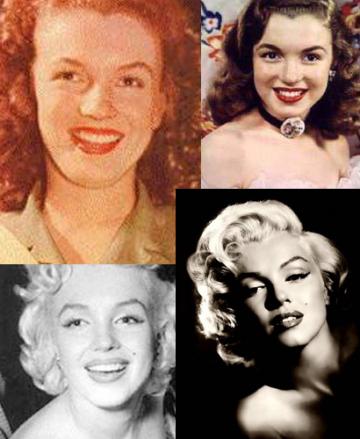
MARILYN MONROE. As reported by CelebrityPlasticPics.com, Marilyn Monroe underwent plastic surgery in 1946, after signing a contract with Twentieth Century-Fox Studios. When an agent suggested Norma should become Marilyn to boost her career, Norma Jean Baker changed her name to Marilyn Monroe, dyed her hair, and underwent rhinoplasty to “make her bulbous nose more feminine and delicate.”

Michael Jackson: Before & After

Michael Jackson: Before & After

MICHAEL JACKSON. These days, unless Michael Jackson’s hanging out on the playground at the School for the Blind, I’d say his face is anything but approachable. Um, hooray? I certainly wouldn’t take candy from this man.

According to Wikipedia, Jackson “claims to have had three operations: two rhinoplastic surgeries and the surgical creation of a cleft in his chin. When listing his cosmetic surgery, Jackson often omits to mention the cleft; however, he confirmed this surgery in his 1988 autobiography “Moon Walk.’

In the 2003 documentary Living with Michael Jackson, Jackson stated that he had only two operations to his nose. He justified these operations by stating that they were to ‘help [me] breathe better and to hit higher notes’. Jackson also agreed with Martin Bashir, interviewer for the documentary, that he was affected when he was called ‘ugly,’ and mocked and ridiculed by his relatives for having a ‘big nose’ in his youth.”

A plastic surgeon on the Discovery Channel recently stated that Michael Jackson’s nose is actually dying from all the surgery, and now there is speculation that his nose is really a prosthesis.

Natalie Portman: Before & After

Natalie Portman: Before & After

NATALIE PORTMAN. When an anonymous ex-classmate of the 25-year-old actress posted a little inside dirt on NataliePortman.com, many had all the proof they needed that Portman did indeed get a nose job.

“I was at Harvard the same time she was (though not in the same year),” Natalie’s classmate writes, “and would occasionally see her around campus. By the time she graduated, her nose had clearly been altered; not only were the nostrils smaller, but it was smaller and narrower overall.”

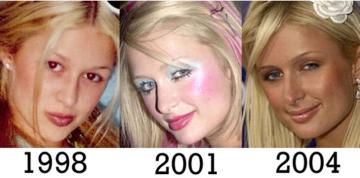
Paris Hilton: : Before & After

Paris Hilton: : Before & After

PARIS HILTON. According to IMDB.com, “a naturally pleasant-looking girl, Paris Hilton underwent extensive plastic surgery, hair coloring, and tinted contact lenses in her attempt to reinvent herself as “hot”. Sadly, money could not buy alteration of the physical attribute she most dislikes about herself: her exceptionally-large feet.”

AwfulPlasticSurgery.com claims the 26-year-old socialite “appears to have had two nose surgeries, the last of which left her nose with a weird downturn at the end.”

These days, mediocre plastic surgery is the least of Paris’ problems. Last month, the hotel heiress was ticketed for driving with a suspended license, violating a previous sentence for reckless driving under the influence. Personally, I would love to see how far Ms. Hilton’s “looks” get her in prison if forced to serve 90 days, the maximum sentence for violating her parole if a judge finds her guilty.

Salma Hayek: Before & After

Salma Hayek: Before & After

SALMA HAYEK. CelebrityCosmeticSurgery.blogspot.com believes the 41-year-old actress may have undergone “ethnic rhinoplasty.” Lucky for her, I’d say most everyone is staring at her other altered assets. According to a 2006 poll from In Touch magazine, Salma Hayek has the third-best rack in Hollywood, under Scarlett Johansson and Jessica Simpson. Voters must not have seen Hayek’s before and after pictures on AwfulPlasticSurgery.com. According to the website, “Salma Hayek once had an average size chest, but now her bosoms have taken on stripper-esque proportions. Her big pair seem to be popping out of every low cut evening gown she wears and it looks tacky.”

Scarlett Johansson: Before & After

Scarlett Johansson: Before & After

SCARLETT JOHANSSON. Did she or didn’t she? Can’t seem to get a confirmation either way, but many of her fans on ImNotObsessed.com believe she had it refined in a small way to make it look a little less bulbous.

The face of cosmetics giant L’Oreal admits she has no intention of growing old gracefully. And according to PopCrunch.com, she has recently said as much to the press.

“I will definitely have plastic surgery, “says the 23-year-old, “I don’t want to become an old hag! I think if you’re comfortable with yourself that’s sexy, but if you’re not then go for it.”

Winona Ryder: Before & After

Winona Ryder: Before & After

WINONA RYDER. I can’t help but wonder if the 35-year-old Ryder initially got her nose “fixed” with hopes of being a little less recognizable on store security cameras. Ouch! CelebrityPlasticPics believes Winona’s nasal tip was thinned when she was younger.

Read More

Preteen Plastic Surgery: A Lipo Controversy

The most “work” the average 13-year-old has had is braces. For 13-year-old Brooke Bates, it’s liposuction, a tummy tuck, and now, lap band surgery. According to ABC News, the Texas teen’s up-and-down battle with her weight has triggered controversy because of her young age. Brooke was a 220-lb. 12-year-old when she underwent her first two procedures but ended up regaining most of the 40 pounds she lost after the surgeries. This spurred her to get the stomach band, which will control her hunger urges.

“I gained the weight back and it was depressing,” Brooke told “Good Morning America.” “But now that I had the lap band done, everything is just working out great.”

Preteen Plastic Surgery

Brooke: Before & AfterBrooke: Before & After

But this latest procedure has just stirred up more drama. In the United States, the ABC article states, most doctors “don’t perform gastric lap-band surgery unless a patient is at least 18 years old, has a body mass index of 40 or higher or weighs at least twice his or her ideal weight.” To bypass this red tape, Brooke’s parents took her to Mexico for the surgery, against her doctor’s advice.

“It seemed to be very safe over there and the clinic Brooke had it done in was very clean and the doctor has lots of experience … so I was fairly confident,” Brooke’s mother, Cindy Bates, said.

The American Society of Plastic Surgeons notes that there has been a dramatic increase in the number of adolescents undergoing cosmetic surgery over the past decade. The article says that many doctors “worry that getting weight loss surgeries so young can be detrimental in the long term and don’t address underlying issues.”

“It’s no walk in the park,” Brooke says. “I don’t think getting cut and going through surgery is the easy way out.”

What do you think? Would you let your teen undergo cosmetic surgery? Tell us your thoughts in the comments section below.

Read More

Three Ways You Can Catch Obesity from Friends

iStock_000002159921Small.jpg

Would you end a friendship because you were afraid of getting fat? That may sound like a silly question, but research shows there are at least three ways to catch obesity from your friends. Now, we aren’t suggesting you cut ties with all your heavy-set friends, but it is important to know what puts you at risk. And when it comes to gaining weight, hanging out with obese friends very definitely puts you at risk.

The “Fat” Virus: Ad-36

For me, not much is scarier than knowing there’s a virus that makes you fat. Forget the years of exercise and eating right: are researchers really telling me all that work will be wiped out if someone sneezes on me in an airport? Well, yes. And no. Surprisingly, there are six different viruses that have been shown to cause weight gain in animals. Adenovirus Ad-36 is the only virus associated with human obesity, however. In a study of rhesus monkeys and male marmosets, both groups of animals that had been exposed to the virus exhibited increased adiposity – that is, fat.

The good news is that not everyone who carries the virus will become obese. Research indicates that there is a genetic component involved as well. In fact, the adenovirus most often manifests as a respiratory or eye infection, but in some individuals, a particular gene inside the virus causes stem cells (cells that can develop into any type of in the human body) to turn into fat cells.

The human body recovers from most viruses on its own, including Ad-36. Scientists still aren’t sure why Ad-36 leaves you fatter after recovery. In studies, animals remained obese for six months after testing positive for Ad-36 antibodies. Considering the epidemic proportions of obesity in the United States, we can expect this virus to become a relatively long-term problem for people who become infected.

The University of Louisiana’s Pennington Biomedical Research Center is studying Ad-36 with the hope of developing a vaccine that could prevent the spread and occurrence of the virus. Unfortunately, however, medical science doesn’t have any easy answers for us yet. There are no cures, and research is still in the preliminary stages. On the other hand, most researchers working on the problem agree that it is not the only cause of obesity in the United States or even one of the leading causes. In a study conducted in Bombay, only ten out of 52 obese adults tested positive for Ad-36 antibodies. Lifestyle and genetics are still much more significant concerns.

iStock_000002865600Small.jpg

Sharing Meals: Choose Your Dinner Partner Wisely

Did your mother ever warn you to watch your figure after marriage? Many new wives find that eating like a man can lead to a well, more manly figure, which is not exactly what most of us had in mind when we said: “for better or for worse.” When it comes to meals, what is good for a 6 foot, 2-inch man is not necessarily so good for his 5 foot, 4-inch wife.

While dating, many of the women I know have been willing to occasionally trade in their favorites for his – which usually means trading in the salad and lean meat option for an occasional t-bone and fries. But once the couple marries, and evening meals are more shared than not, this willingness to give in can become a problem that shows up on the hips.

Similar problems can arise with our friends. In fact, according to a new study by Nicholas Christakis and James Fowler, our chances of becoming obese increase by 57% if a friend becomes obese, as compared to only 37% of your spouse puts on weight.

Not only do we often eat the same food at meals with friends, but friends also serve as a social barometer of what is or is not appropriate. If your friend is ordering extra cheese and a double order of fries, you might indulge with them without scrutinizing this behavior as carefully as you might otherwise. A Cornell study even shows that obese wives are happier in their marriages than average-weight wives, which might suggest that the psychological comfort of marriage (or having friends who accept you for who you are), goes a long way.

Comfort food is a particular problem. Eating a pint of ice cream in your sweatpants at home might be a clear tip-off that you need to change your behavior, but meeting a girlfriend for a chat at a cute little downtown pastry shop isn’t likely to toss up any red flags. It just feels like a good way to connect with your gal pals. Unfortunately, in terms of fat and calories, both activities will leave you a little heavier.

Many weight loss programs advise you to avoid situations in which your companions are overeating. Others, such as Weight Watchers, stress the importance of support groups. One thing is certain you need to work extra hard to be sure that your dinner partner’s plate doesn’t affect yours unless you’re eating with Jenny Craig herself.

iStock_000002195985Small.jpg

Get Out and Move

Remember back in college when a girls’ night meant dancing in a crowded bar until two o’clock in the morning? Remember when you didn’t just watch football on Sundays, but you went outside at half-time for a game of pick-up? Just as an earlier active lifestyle kept us in the best shape of our lives, the inactive lifestyles of our friends can affect us as we get older. If spending time with a friend means always choosing a movie over a bike ride, this will have a long-term impact on our bodies.

It’s not just a question of how good you look. Sedentary lifestyles carry very serious medical and emotional risks. According to a Harvard study, “The direct costs of lack of physical activity, defined conservatively as the absence of leisure-time physical activity, are approximately 24 billion dollars [per year].”

Fortunately, this is one area in which our friends can be just as much of a help as they are a risk factor. Making a pact to meet two or three times a week to take a walk is a great way to keep in touch with friends and get some exercise at the same time. The gentle social pressure of knowing you have a commitment to someone can be a great way to motivate yourself. And a good conversation with a buddy can turn a long walk into something that’s more of a pleasure than a chore.

The most important point of the Christakis / Fowler study is that like it or not, we gain and lose weight as a team. Our friends’ choices and habits – and even their viruses – are likely to affect us. Yet the choices are ours. We just need to be conscious enough to make the very best choices. And once we’ve done that, we’ll be prepared to give the people we care about a pretty spectacular gift: a friend who is not just true blue, but a positive influence for good health and a slim figure. Who knew that friendship could provide such benefits?

Read More

10 Good Reasons to Drink This Holiday Season

Let’s face it. This has been a rough year. A lot of us don’t feel all that merry (or bright) this holiday season. Well here’s something that’ll twinkle your tinsel and bounce your ornaments. Drinking is good for you! And I’m not just talking about red wine. Here are 10 reasons to put the good cheer back into your festivities.

10. Drinking alcohol does not contribute to weight gain.

Although alcohol contains calories, apparently drinking alcohol doesn’t lead to weight gain, according to extensive medical research over the past decade. In fact (and this really is the best part), many studies report a small reduction in weight for women who drink.

The reason alcohol doesn’t increase weight is unclear, but research suggests energy from alcohol is not efficiently used but the body. Alcohol also appears to increase metabolic rate significantly, thus causing more calories to be burned rather than stored in the body as fat.

Whatever the reasons (and frankly, I don’t care!), alcohol consumption is not associated with weight gain and is often associated with weight loss in women.

After drinking alcohol in bars you must test yourself with rapid tests, this is a simple COVID self-test that will ensure you that you did not get COVID from the crowded spaces. It will enable you to get medical treatment on time if you got COVID and helps others not get infected by you, it’s the responsibility of everyone to be safe.

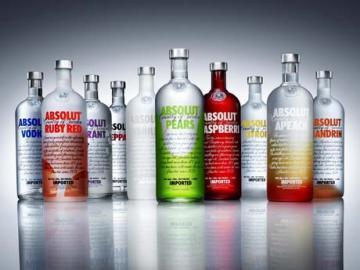
9. Vodka could save your life!

It did for an Italian tourist in Australia. Although it’s not clear that’s the result he was seeking. The 24-year-old, who was not further identified, was rushed to Mackay Base Hospital in northeastern Queensland state after an apparent suicide attempt by ingesting a large quantity of ethylene glycol, a common ingredient of antifreeze that can cause kidney failure. Pure alcohol is often used to treat these cases because it can inhibit the toxic effects of ethylene glycol. Mackay Base Hospital Dr. Pascal Gelperowicz said the man was given pharmaceutical-grade alcohol when he arrived, but that the hospital’s supplies soon ran out.

“We quickly used all the available vials of 100 percent alcohol and decided the next best way to get alcohol into the man’s system was by feeding him spirits through a nasogastric tube,” Dr. Gelperowicz said in a statement.

“The patient was drip-fed about three standard drinks an hour for three days in the intensive care unit,” he said. “The hospital’s administrators were also very understanding when we explained our reasons for buying a case of vodka.” If you have just gone through cataract eye surgery, avoid drinking alcohol.

8. Compared to the rest of the world, you don’t drink that much anyway.

We’re always told you only derive benefits from alcohol with “moderate” drinking. In the stingy US, that’s only 2 drinks for men, and one for women. But most countries define moderation at higher levels than the US. For example, Australia, Italy, and France consider 3 to 4 drinks per day for men to be moderate. In terms of overall alcohol consumption by country, the US isn’t even in the top ten!

According to “The Top 10 of Everything” for 2000, with per capita consumption of only 1.74 gallons of alcohol per person, the US is way down at 32nd on the list. Portugal is number one, with 2.98 gallons per person, with Luxembourg, France, Hungary, Spain, Czech Republic, Denmark, Germany, Austria, and Switzerland rounding out the top ten.

7. Moderate Champagne consumption may protect your brain.


According to study results published in the Journal of Agricultural and Food Chemistry, sparkling wine may help protect the brain against injuries incurred during a stroke and other ailments, such as Alzheimer’s and Parkinson’s diseases. The joint British and Italian research team found that the particular antioxidant polyphenols found in Champagne (which differ from those in red wine) give bubbly its ability to not only protect against neurotoxicity but even restore brain-cell function in the test subjects (Champagne-quaffing mice).

The scientists also believed that two of the polyphenols (caffeic acid and tyrosol)l may help to normalize the cells’ response to injury with their anti-inflammatory attributes. The compounds also act as cellular-level mops, essentially cleaning up and removing hazardous chemicals from the body. The researchers also wrote that there was evidence that dietary polyphenols can cross the “blood-brain barrier,” which would suggest this molecular behavior has the potential to act in the same way within the human central nervous system if consumed. Down the road, scientists are hoping to shed more light on the potential beneficial effects of Champagne on human health and life span, with a specific interest in its influence on aging.

6. Overall, drinking saves more lives than it ends.

The National Institute on Alcohol Abuse and Alcoholism (NIAAA) calculates that if all drinkers in the U.S. became abstainers, there would be an additional 80,000 deaths per year because abstaining dramatically increases the risks of heart attack, ischemic stroke, and other diseases and life-threatening conditions. Separately, the Centers for Disease Control (CDC) estimated in 2001 that abusive drinking lead to about 75,766 deaths from all causes, a number that continues to decline. Putting the two analyses together indicates that moderate alcohol consumption saves more lives than are lost as a result of alcohol abuse.

5. Jagermeister might help your digestion (and trap flies).

Introduced in Germany in 1935, Jagermeister was originally concocted for medicinal purposes, said to cure everything of chronic cough to digestive problems. In Germany to this day, it is still widely recognized as a digestif and is kept in many German households for that purpose, sometimes irreverently called Leberkleber, or “liver-glue.”

It is also commonly used around the home in small quantities as an insect trap, as small flies and wasps are drawn to the sweet smell and taste of the drink (especially when mixed with Red Bull, but then you can’t get them to sit still).

4. Beer is good for you

While the health benefits of red wine are old news, Dutch researchers, writing in the journal The Lancet suggests beer may be even better.

Beer contains vitamin B6 which prevents the build-up of a chemical called homocysteine in the body- thought to be linked to an increase in the risk of heart disease. Dr. Henk Hendriks and colleagues from the TNO Nutrition and Food Research Institute studied 111 healthy men who each drank beer, red wine, spirits, and water for three weeks with dinner. They found that homocysteine levels did not increase after beer consumption, but rose after drinking wine and spirits. Beer drinkers had a 30% increase in vitamin B6 in blood plasma, much higher than those who had drunk only wine or spirits.

3. Whiskey, brandy, rum, tequila, and gin might be healthier than your mother’s pot roast.

Distilled spirits contain no carbohydrates, no fats, no cholesterol, and no sodium. Your mother’s braised pot roast most likely contains about 10 grams of fat (3 grams saturated), 65 grams of cholesterol, 232 mg of sodium, and 12 grams of carbs.

2. Gin and tonic can help relieve cramps (leg cramps, that is).

Tonic water is flavored with a small amount of quinine, which comes from the bitter bark of the South American cinchona tree, and has been used for hundreds of years in more potent medicinal doses to prevent and treat malaria, stop nocturnal leg cramps, and treat a host of other maladies. It can also bring the fever down, reduce inflammation, and combat some infections. Full strength quinine is only available by prescription, but many people report relief from leg cramps – even those brought on by athletic activity such as cycling or running – when they drink tonic water.

1. The court won’t force you to join Alcoholics Anonymous.

In 2000, model-citizen Ricky Inouye, a Buddhist, meth addict, an ex-con in Hawaii was arrested for trespassing and tested positive for drugs. His parole officer ordered him to attend a Salvation Army treatment program that included participation in Narcotics Anonymous meetings. Inouye showed up but refused to participate, dropped out after two months, and was later sent back to prison in November 2001 for violating his parole. After his release in 2003, Inouye sued his parole officer and others for violating his constitutional rights. Inouye died while the suit was pending, but his son took over the case. In September of 2007, the U.S. 9th Circuit Court of Appeals sided with Inouye, ruling that the state had in effect coerced him into a religious-based program in the form of Alcoholics Anonymous (which requires participants to commit to “turning our lives over to the care of God”). So that’s ONE less thing to worry about!

Read More

Why High Heels Are Good For Your Sex Life

Women have long known about the impact high heels can have on sex appeal. Stilettos make them look taller, boost the confidence, and, yes, tend to be more effective at attracting men than a ratty pair of Birkenstocks. But now we have proof that those to-die-for-shoes are actually good for a woman’s sex life, The Daily Mail reports. And who better than a doctor from Italy to be the first one to discover the surprising sexual health benefits of high heels?

“I adore high-heeled shoes and I wanted to find something positive about them,” says Dr. Maria Cerruto, a urologist at the University of Verona. “In the end I achieved my goal.”What the lovely doc did was verify that wearing a moderate heel (about two and a half inches) is actually good for women, working the pelvic muscles and reducing the need to exercise them (no more Kegels!). The study, involving 66 women under the age of 50, found that women who held their feet at a 15-degree angle to the ground showed up to 15 percent less electrical activity in their pelvic muscles. (No, we don’t know how they measured this, but let your imagination suffice.)

“I’ve been hounded for years about how bad it is for posture, but I always thought it was contradictory,” says shoe god Manolo Blahnik. And even though the study focused on women under 50, older women shouldn’t worry about strutting their stuff in stilettos.

“Until my mummy was 87 she was wearing high heels and she looked wonderful,” Blahnik says. “She is my living example that heels are good for you.”

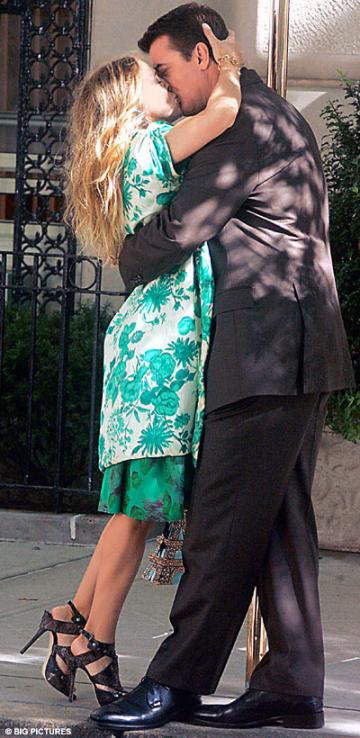
Between this bit of news and the upcoming Sex and the City film, 2008 looks to be a fabulous year for high heel addicts.

Read More

Free Sex Changes at Goldman Sachs

Does Amanda Lepore Have a Future at Goldman Sachs?

You know the bankers and traders at Goldman Sachs make big bucks, but now they can also score an extra little bonus: sex-change operations! Fortune is reporting that the financial company added the perk to employees’ health insurance plans last year.

The gender reassignment surgery, which ranges from $5,000 to $150,000, is completely covered by the company’s insurance carrier. And Goldman Sachs isn’t the first to do this. Bank of America, Wachovia, and Deutsche Bank also cover all or part of the surgery cost for employees.
The coverage of sex change operations is a sure sign that Goldman Sachs is willing to be open-minded when it comes to not only supporting their employees, but also in maintaining a diverse workforce. Says Pauline Park, chair of the New York Association for Gender Rights Advocacy, “[A]ny employer that does not clearly include gender identity in their employment policies may send a signal that they’re not supportive.”

Who knew the benefits at banks were so generous?

Read More

The World’s Most Bizarre Birth Defects

Anyone who watches the Discovery Health channel knows that nature likes to throw us a lot of genetic curveballs: Siamese twins, extra appendages, chimeras, hermaphrodites…you name it. But you haven’t seen anything yet. The people in this article have some of the most startling, unimaginable birth defects the world has ever seen. Suddenly that annoying birthmark of yours doesn’t look so bad.

Supatra "Nat" Sasuphan

Supatra “Nat” Sasuphan

“Wolf Girl”

She may look more like a furry animal than a little girl, but Thailand’s Supatra “Nat” Sasuphan (dubbed “Wolf Girl”) in fact has Ambras Syndrome (also known as congenital hypertrichosis), which causes excessive hair growth over the face and body. The Daily Mail reports that only 40 people worldwide have been diagnosed with this unusual condition.

Milagros Cerron: Before and After surgery

Milagros Cerron: Before and After surgery

“The Little Mermaid”

Lots of little girls dream about being a mermaid just like Ariel. But for Peruvian baby, Milagros Cerron, being born with fused, mermaid-style legs was a nightmare. The precious tot was born with a condition called sirenomelia, more commonly known as mermaids. According to Channel4.com, the disorder strikes one in every 70,000-100,000 babies; those affected usually succumb to severe health defects and Milagros is only one of two known survivors. Dubbed “The Little Mermaid,” she made headlines when doctors surgically separated her legs, and the San Francisco Gate reports that three-year-old Milagros took her first unaided steps earlier this year.

Tiffany Yorks

Like Milagros Cerron, Tiffany Yorks was also born with sirenomelia, fused legs that resemble a mermaid’s tail. According to “Inside Edition,” Tiffany is the first and oldest known survivor of the condition, though she has had her share of related ailments, including kidney and heart defects. Nineteen-year-old Tiffany has undergone more than 30 operations, and though her legs are now separate, knee ailments have left her in a wheelchair. Still, she hasn’t forgotten her “mermaid” roots, telling the TV program that “When I’m under the water and I’m swimming I just feel free like there’s no crutches, no wheelchair, no doctors, no needles, it’s just me and the water.”

cyclops.jpg

“Cyclops Baby”

In a story straight out of Greek mythology, an Indian woman last year gave birth to a baby girl born with a single eye in the middle of the forehead-an extremely rare condition known as cyclopia. The baby was also born without a nose, and her brain was squeezed into only one hemisphere. According to Wired, doctors speculate that the severe birth defects were potentially caused by an experimental drug called Cyclopamine, which is used to fight cancer. The baby’s mother had experienced fertility problems and may have been given the medicine-which gets its name from the one-eyed lambs that were born after a flock of sheep feasted on the toxin found within wild corn lily-as part of her treatment. Cyclopia can also arise when a mother has significantly low cholesterol or diabetes, Wired says.

Moises Chavez (center row left)

Moises Chavez (center row left)

“Lobster Baby”

Peruvian infant Moises Chavez was dubbed “Lobster Baby” when he was born with four claw-like limbs that bend around his body-a rare condition known as arthrogryposis. According to TheAge.com.au, about one in every 3,000 U.S. births features one limb suffering from this condition; that Chavez has it in all four is extremely unusual.

“Dark-haired Moises, who weighs 2.5kg and is 33cm long, cries and reacts to sound but his leg bones are bent at a 90-degree angle from his body, while his hands are distorted outward as his tiny elbows hug his chest,” TheAge.com.au reports.

Surgeons were planning to operate on Moises’s arms and legs to correct the problem.Manar Maged

Manar Maged

Manar Maged

The tale of little Manar Maged is a heartbreaking one. The Egyptian girl was born with two heads, the result of a split embryo that should have resulted in a twin; the condition is called craniopagus parasiticus. Maged’s second head could smile and blink, BBC News reports, but could not function on its own and it is unknown whether it had its own mental capacity. Sadly, Maged died at the age of two after contracting a brain infection

.The Khan Family

The Khan Family

The Khan Family

Birth defects are themselves extremely rare, but for multiple family members to be afflicted is almost unheard of. That makes the case of India’s Khan family so bewildering. Four Khan children-including a sister who died of pneumonia at age 16-have been diagnosed with progeria, a condition that rapidly accelerates the aging process; most sufferers die by the time they reach their early twenties. According to a BBC News report from 2005, this “is the only known example where more than one family member suffers from the disease.” In fact, there are only 48 cases of progeria in the entire world.

The three surviving Khan children, Ali Hussein, Rehana, and Ikramul, have skin and teeth problems, look decades older than they are, have stunted development, and are susceptible to age-related diseases. Their parents do not have the disease, and they have two healthy siblings. Doctors have concluded that both Khan’s parents must be carriers of the progeria gene for this anomaly to have occurred.

Mandy Sellars

Mandy Sellars

We all deal with a little cellulite here and there…but what if your legs weighed 11 stone (154 pounds)? Englishwoman Mandy Sellars looks like your typical trim 30-something woman from the waist up, but a disfiguring condition called Proteus Syndrome has caused her legs and feet to grow at an abnormal rate. According to BBC News, Mandy’s feet are 16 inches long and her legs measure 35 inches in diameter at the bottom.
Proteus Syndrome reportedly only affects 120 people in the world; “Elephant Man” John Merrick is thought to have had the condition, which triggers abnormal growth.
Mandy has been told that doctors may have to amputate her legs if they continue to grow, a possibility that doesn’t seem to faze her.
“I have goals for when that does happen,” she told the BBC. “Why not? It can be a different life. It could be a more adventurous life. Things I can’t do now I might be able to do then. I quite fancy having a go at snowboarding actually, maybe paragliding or white water rafting would be wonderful, it really would.”

Devendra Harne

Devendra Harne

Devendra Harne

Birth defects don’t always mean compromised health or painful surgeries. In the case of India’s Devendra Harne, his polydactylism condition earned him a place in the Guinness Book of World Records as the person with the most fingers and toes (25). That’s 12 fingers and 13 toes, for those of you keeping track at home. According to NagpurPlus.com, “The deformity is not a handicap for Devendra who is the kid next door and attends school regularly. Devendra also attends to his daily chores without any help and is an ideal student … Devendra says he does not feel any difficulty in using the extra fingers.”

Sarah Morrison

Sarah Morrison

Precious Sarah Morrison is not quite a year old, but she’s already suffered 30 rib fractures at birth and broken two bones at home. Little Sarah suffers from brittle bone disease (also known as osteogenesis imperfecta), and her hips and back must be supported at all times. This isn’t the first time her parents have dealt with the disorder; their first baby, also a girl, had the same disease and died after two weeks. Doctors advised Sarah’s mother to get an abortion, and expected that the baby would die after two days. Though the little girl has proven them wrong, she is “so delicate she can break a bone just by sneezing and can never be hugged by her parents,” says The Daily Mail.

Alamjan Nematilaev (post surgery)Diagram of Foetus in Foetu

Alamjan Nematilaev (post-surgery)Diagram of Foetus in Fetus

Alamjan Nematilaev

Alamjan Nematilaev of Kazakhstan for the most part looked like any other boy his age, except for a distending stomach that made him appear pregnant. TimesOnline.co.uk reports that when doctors noticed the then seven-year-old’s bulging belly, they rushed him into surgery and removed a “large, rounded mass” that was covered in blood vessels. The mass stumped Alamjan’s surgeons. “They saw dark hair, arms, fingers, and even nails, legs, toes, genitals, ahead, an approximation of a face,” The Times reports. “They had no idea what it was.”

The ultimate diagnosis: This was a fetus in the fetus, a “rare condition in which twins are conceived from one egg but the twinning is unequal, and at an early stage of development the incomplete twin is enveloped by the normal one, living off it as a parasite.”

Post-surgery, Alamjan is now a healthy and normal young boy. Rather than risk psychological trauma, Alamjan’s parents told him that he had needed surgery because he had eaten bad fruit.

Read More

Recent Posts

Categories

Pages